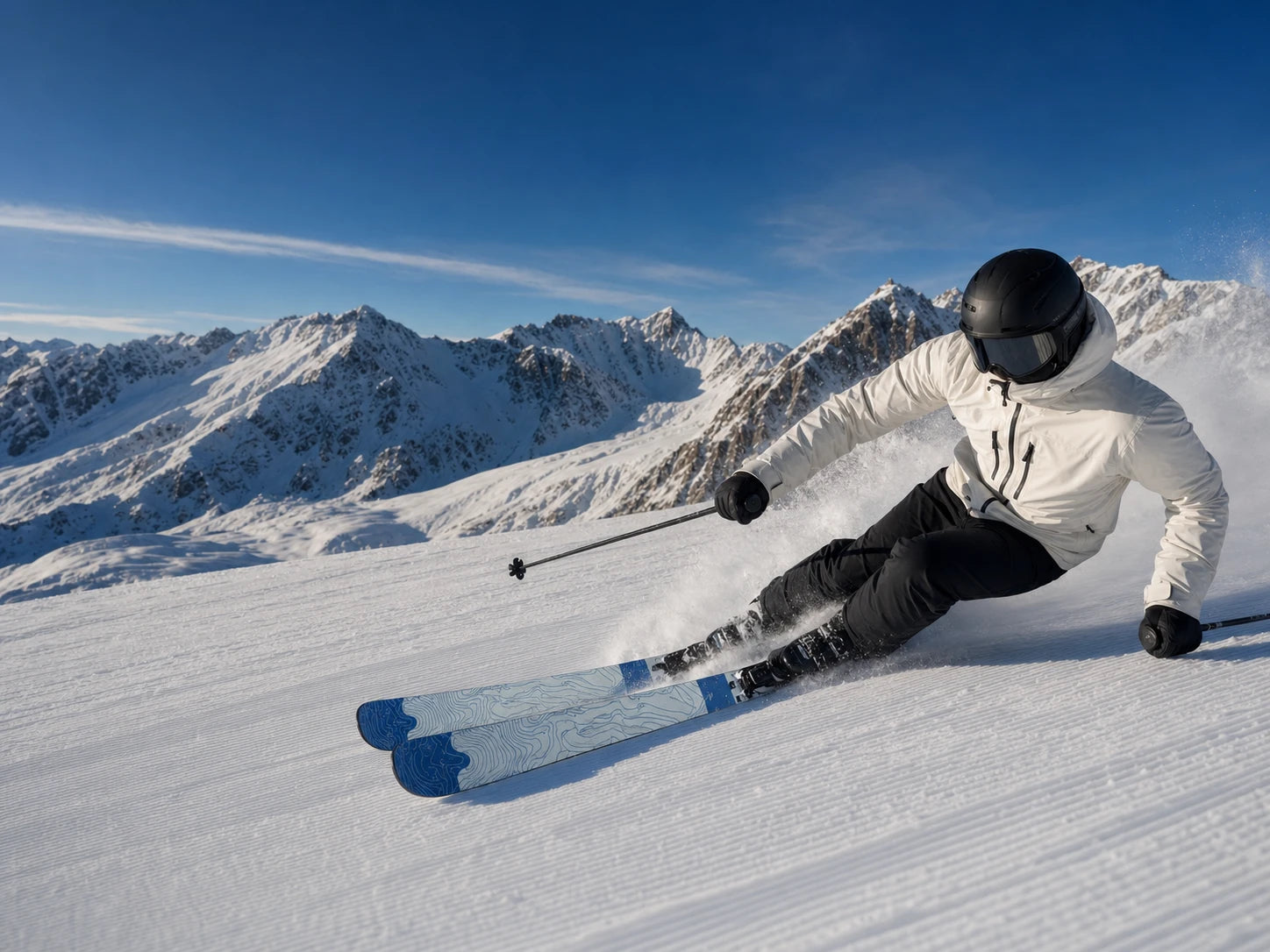
Two skis. One uninterrupted idea.
A strong ski graphic reads as one composition across the pair, while each ski still works on its own from tip to tail.
Short answer. Choose one subject, palette and visual rhythm, then design the left and right skis as a pair rather than duplicating the same narrow poster twice.
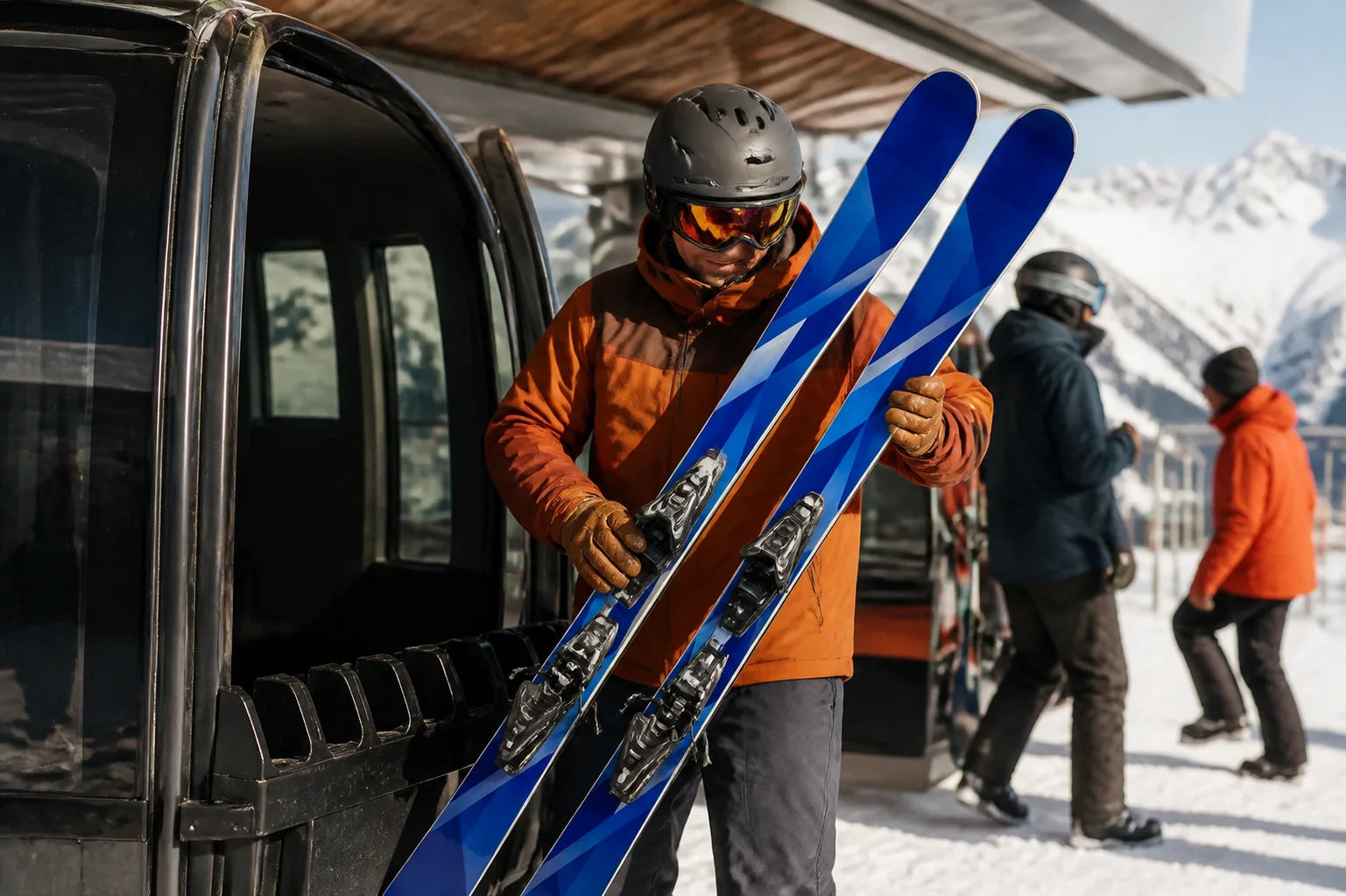
Design the space between the skis.
A ski pair is not two repeated strips. Treat the gap, the left-right relationship and the long vertical reading as active parts of the composition.
Write one precise visual sentence.
Use subject + medium + palette: glacier macro photography in ice blue; abstract wildflower screenprint in vermilion; night topography in navy and cream.
Assign the focal point across the pair.
Let one large idea connect left and right, but give each ski enough information to work independently when the pair separates on snow.
Protect the useful centre.
Keep faces, lettering and essential symbols away from narrow edges and uncertain crops. Use scale, contrast and negative space so the artwork survives the ski's geometry.
Simplify the running bases.
Repeat the palette and one bold anchor across the two bases. Avoid tiny critical detail: the running surface should read at distance and remain believable as P-Tex graphics.
See the choice before you make it.
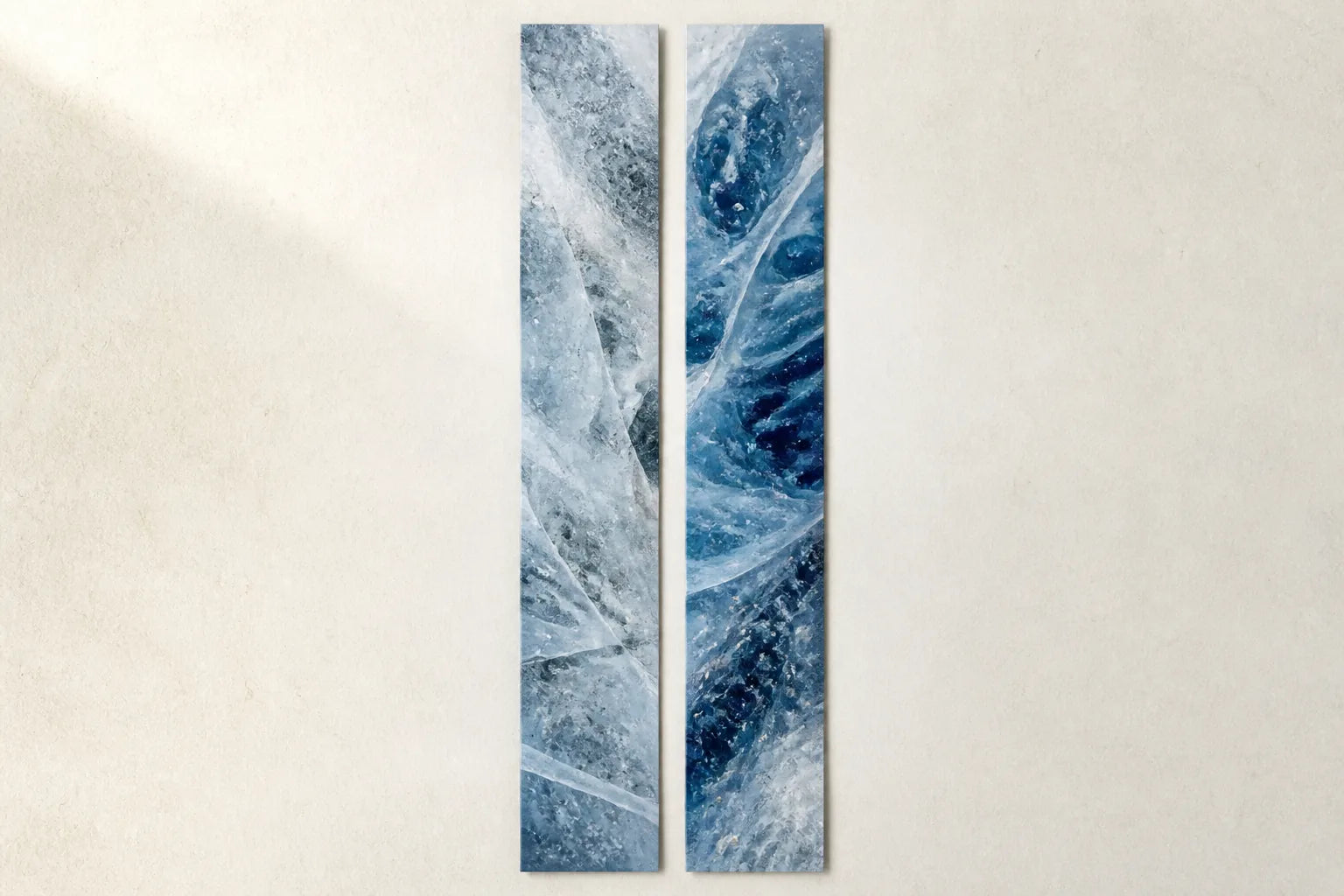
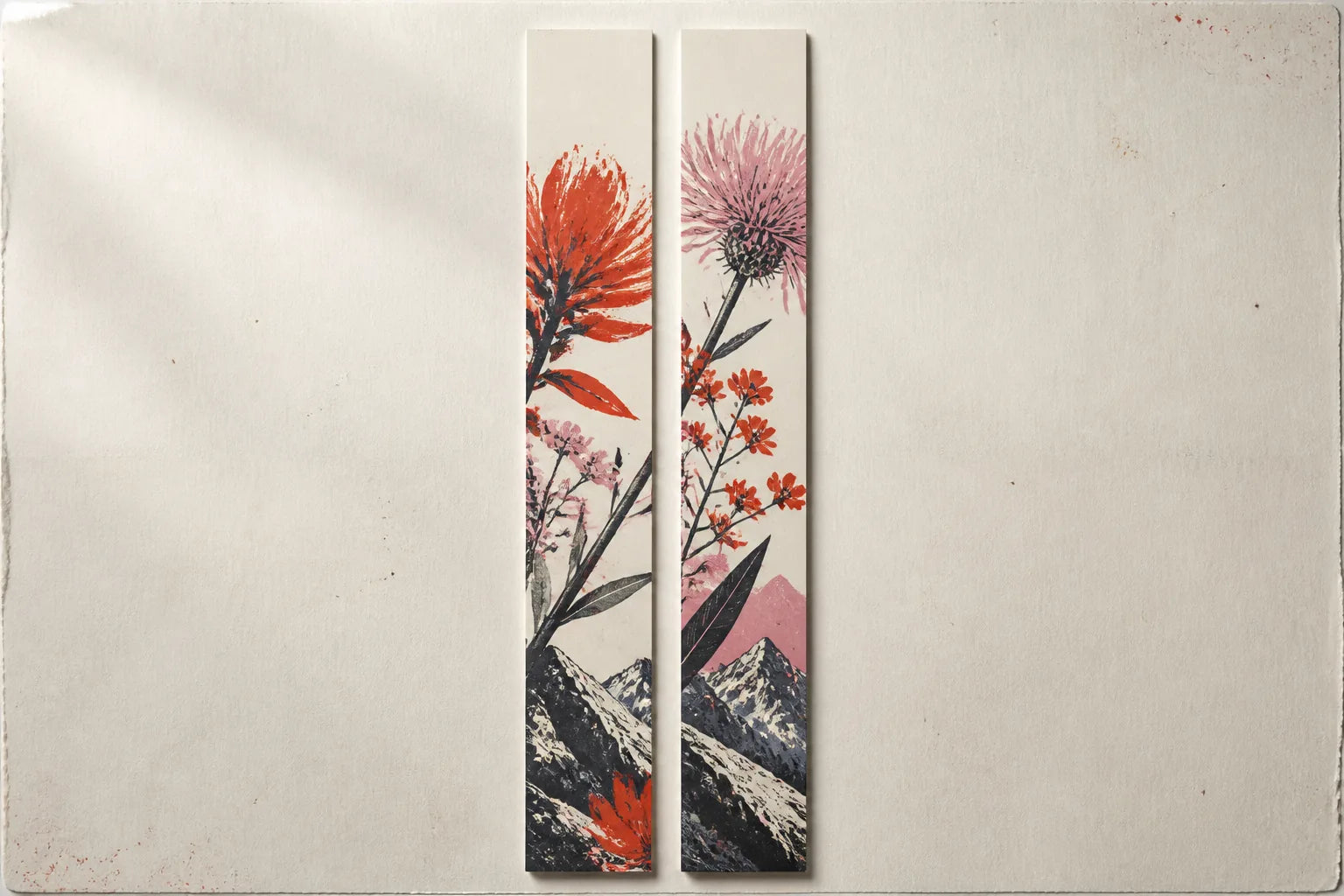
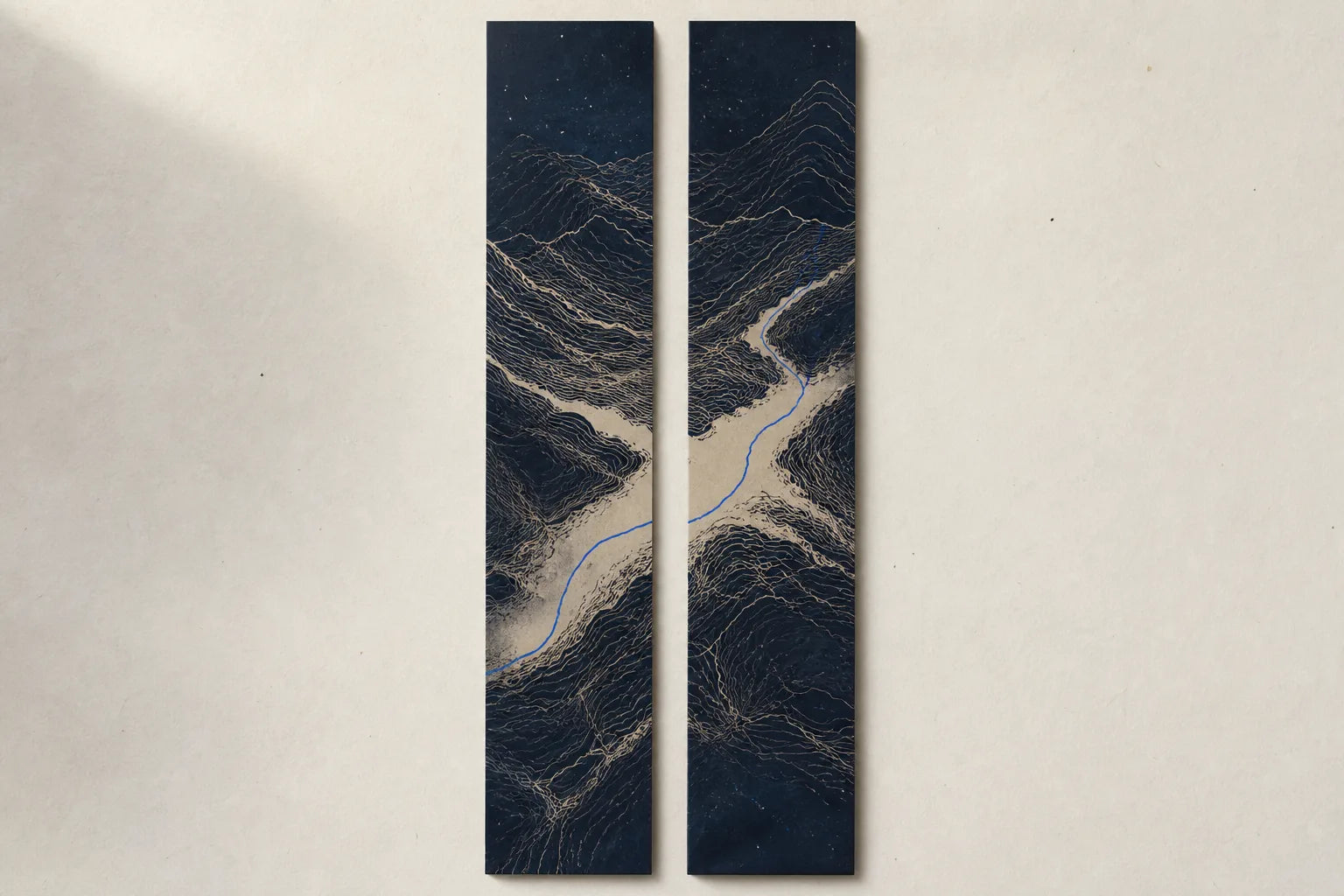
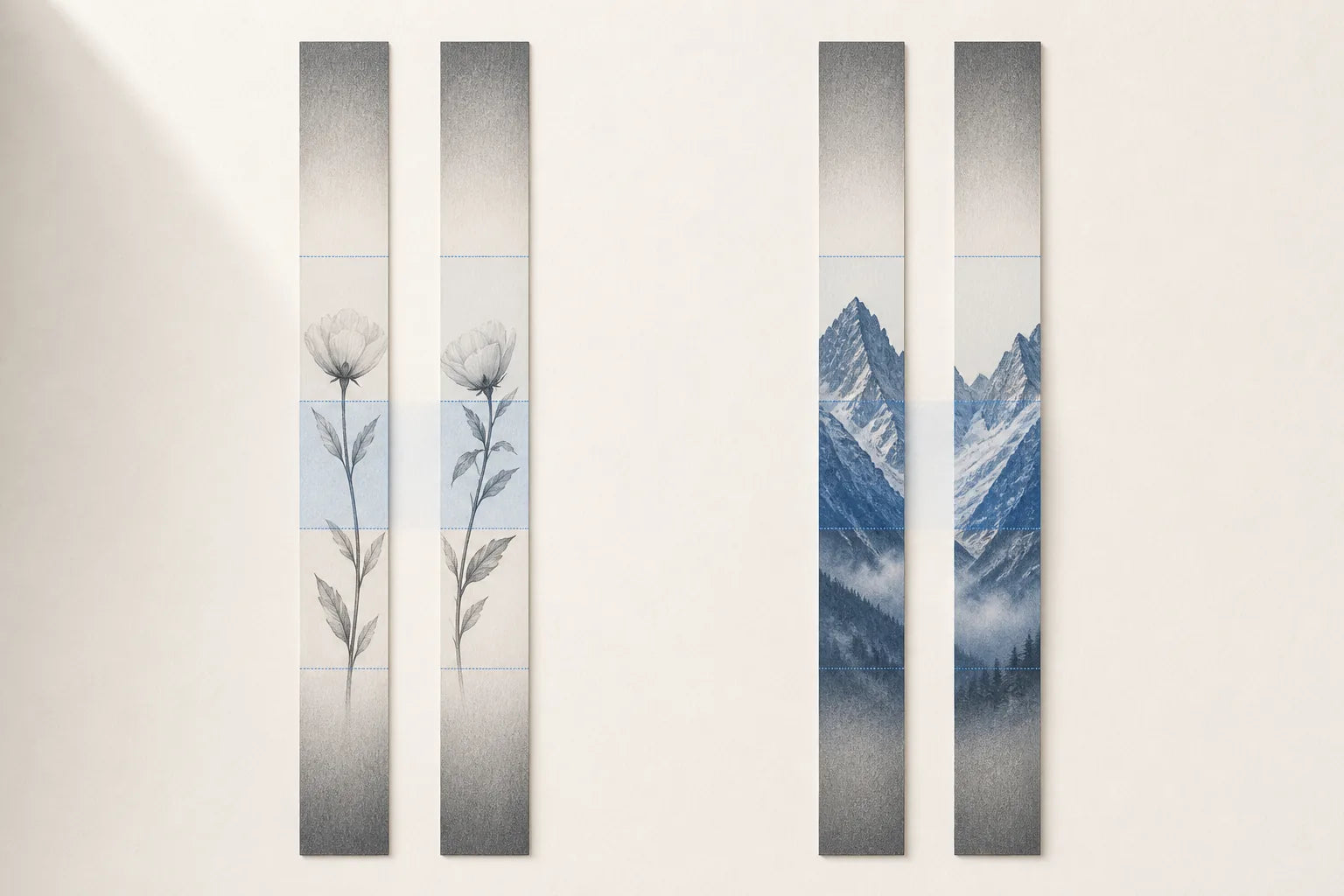
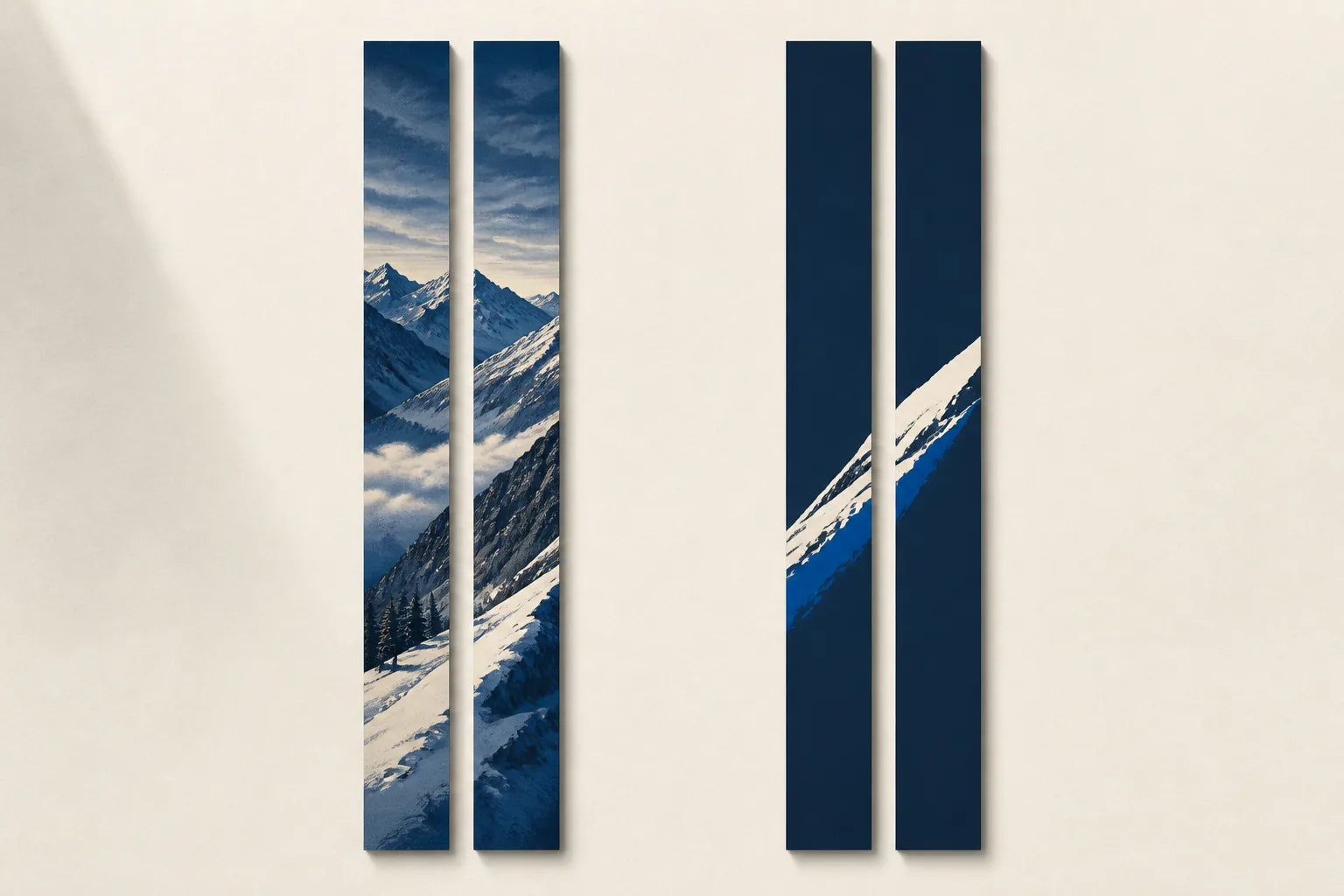
What matters before you choose.
Compose across the pair.
Place the focal point, negative space and directional movement across both skis. The pair should connect at a glance without depending on perfect alignment on snow.
Respect the narrow format.
Large shapes and controlled detail survive the long ski canvas. Keep critical faces, symbols and contrast inside the useful centre of each ski.
Give TOP and BASE separate jobs.
The tops can carry the paired story. The bases need bolder anchors, stronger contrast and a composition made for a real running surface.
One mountain, read across two skis.
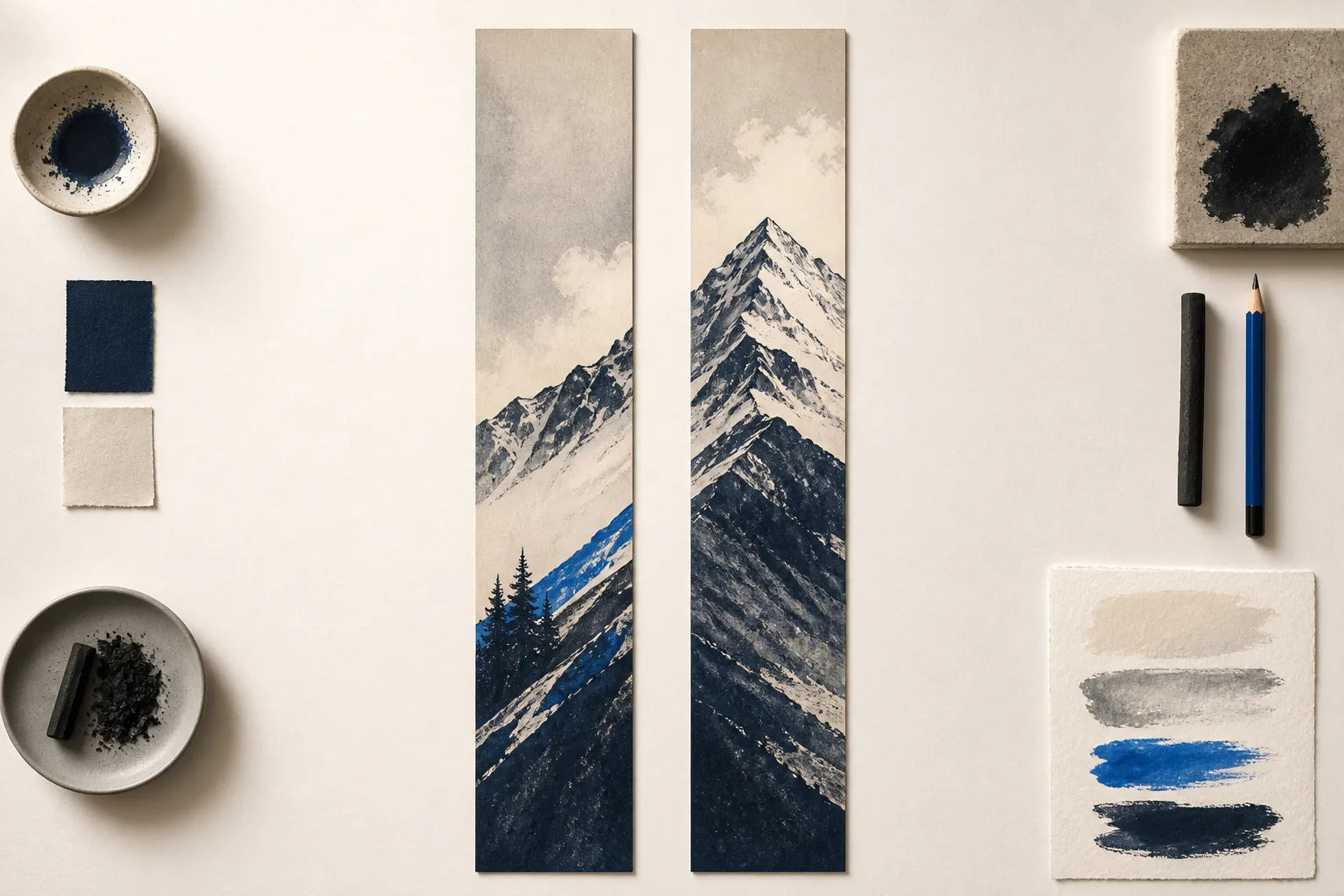
A reference photograph suggests a blue-hour ridge, but the final design does not paste the photo twice. The left ski carries the climb and darker foreground; the right opens into the summit and sky. A shared diagonal connects them without requiring perfect alignment. On the bases, that ridge becomes one broad two-colour mark split across the pair.
Questions riders ask before they commit.
Should both skis use exactly the same graphic?
Usually no. Repetition can work, but a paired composition feels more intentional: shared palette and language, different placements, and one visual rhythm that connects left and right.
Can AI create a continuous design across both skis?
Yes, from a reference you own or may use. The ski pipeline builds the paired artwork in controlled sections and the editor lets you review the complete left-right composition before production.
Build the pair as one canvas.
Choose the ski setup, bring a permitted reference and create an original graphic that belongs across both skis.
Create my ski design