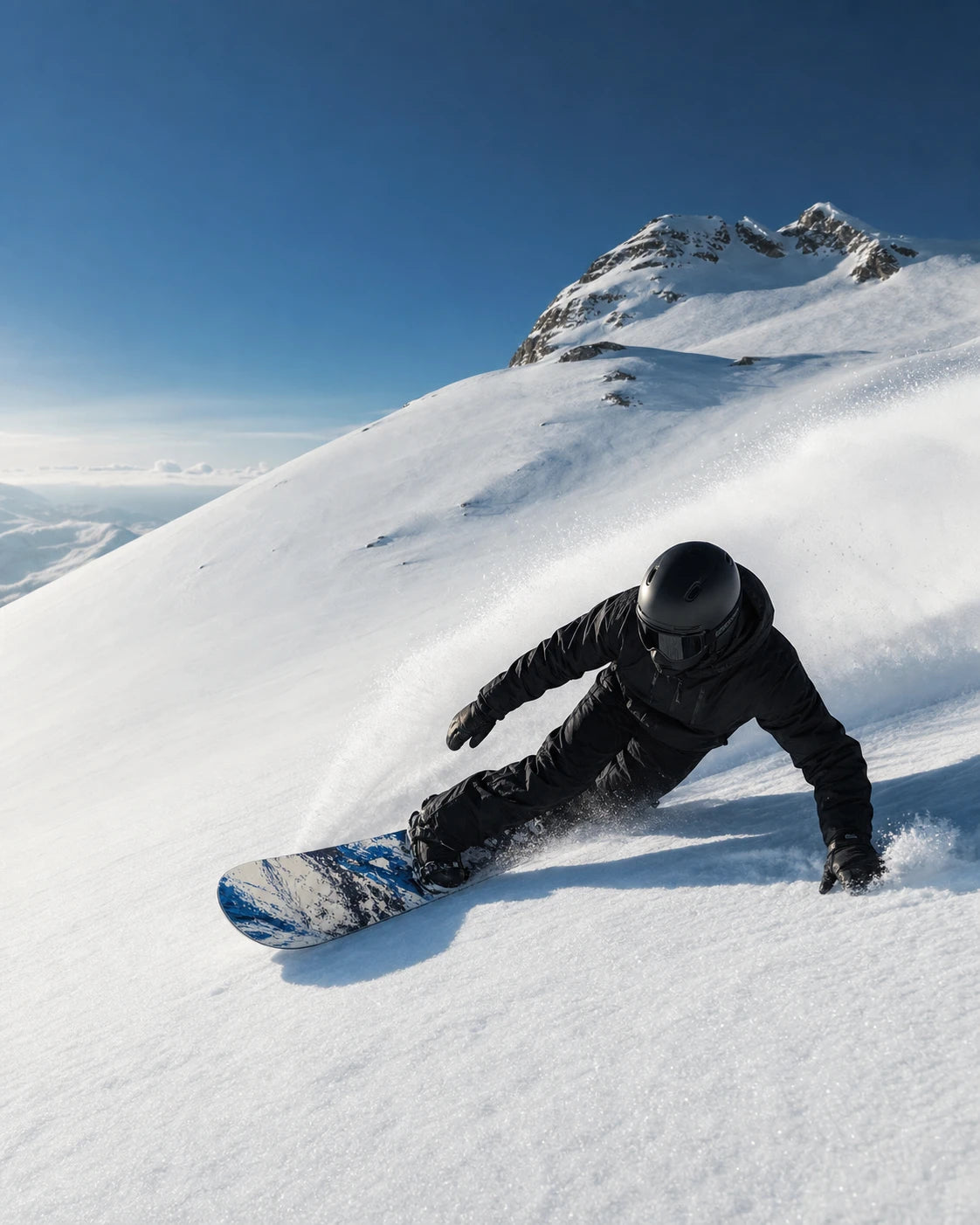
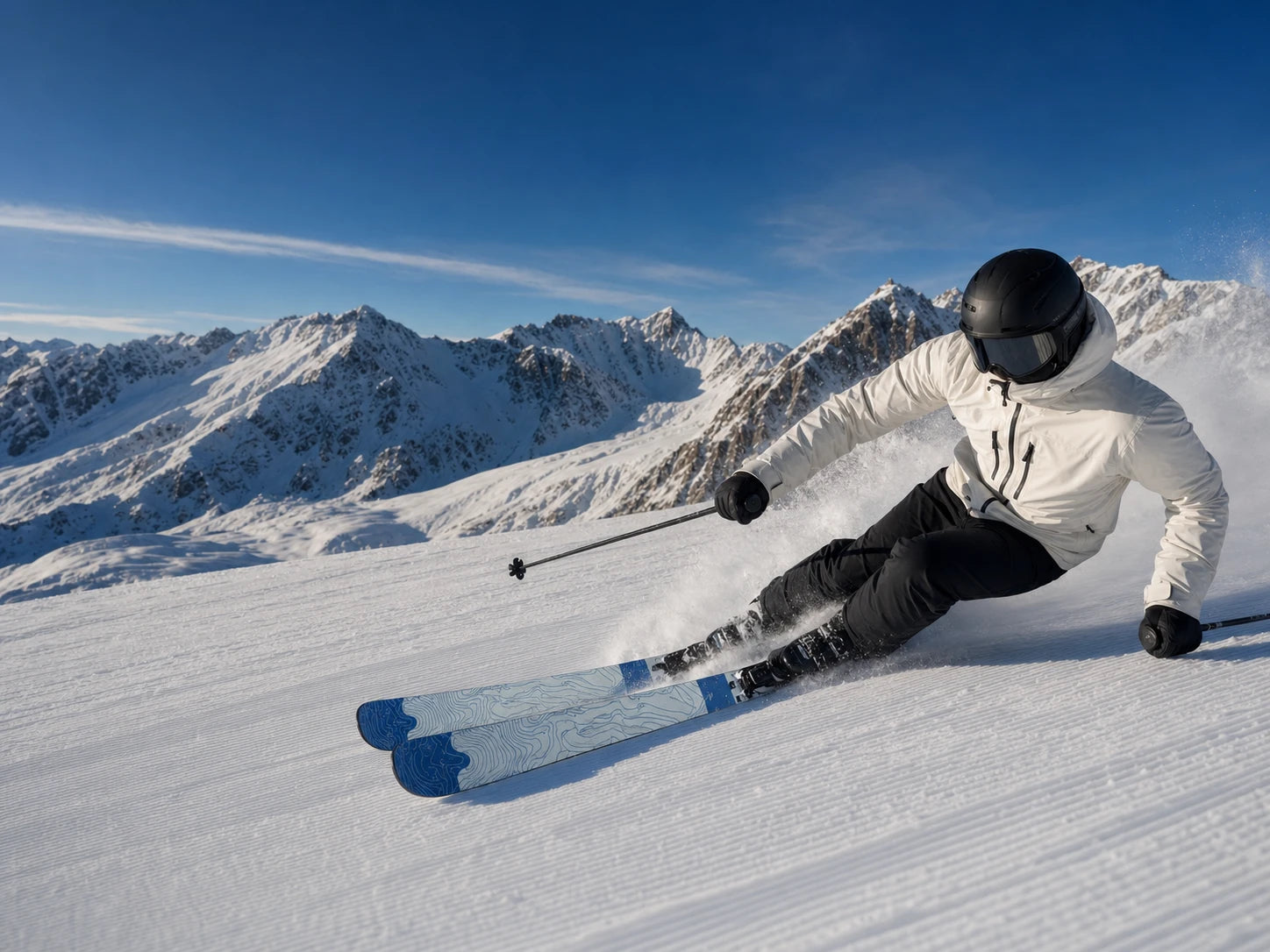
Start with a feeling. End with your board.
Search by subject and style, not by one finished board to copy. Turn a direction you love into an original TOP and a purpose-built BASE.
Short answer. Pick a long-tail idea such as a cyanotype botanical, northern lights screenprint or vintage lace graphic, explore two different styles, then build a new composition from a reference you own or may use.
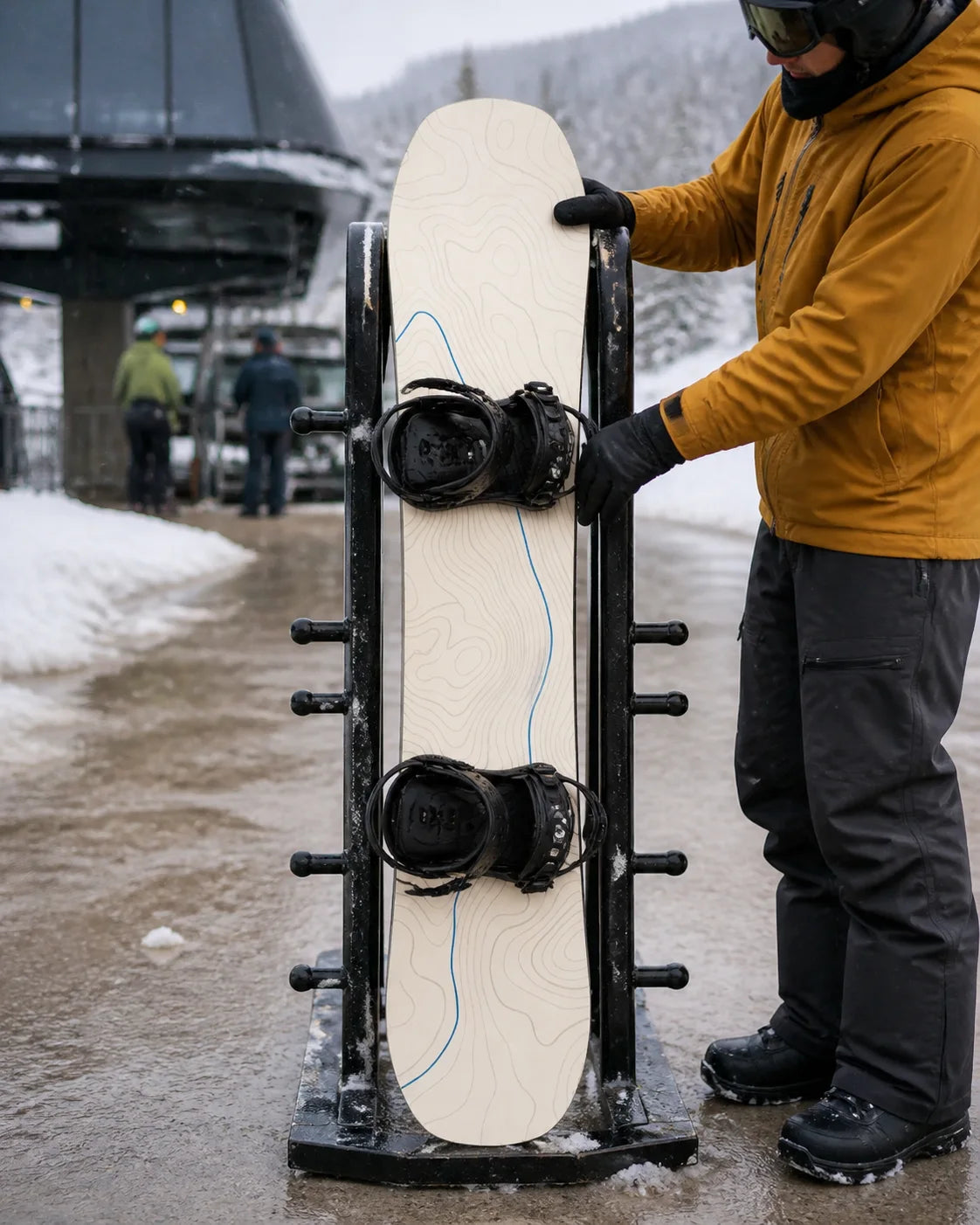
Turn one saved idea into an original pair.
The strongest prompt is not “make this board”. It extracts a subject, a medium and a palette, then gives TOP and BASE different jobs.
Build a long-tail direction.
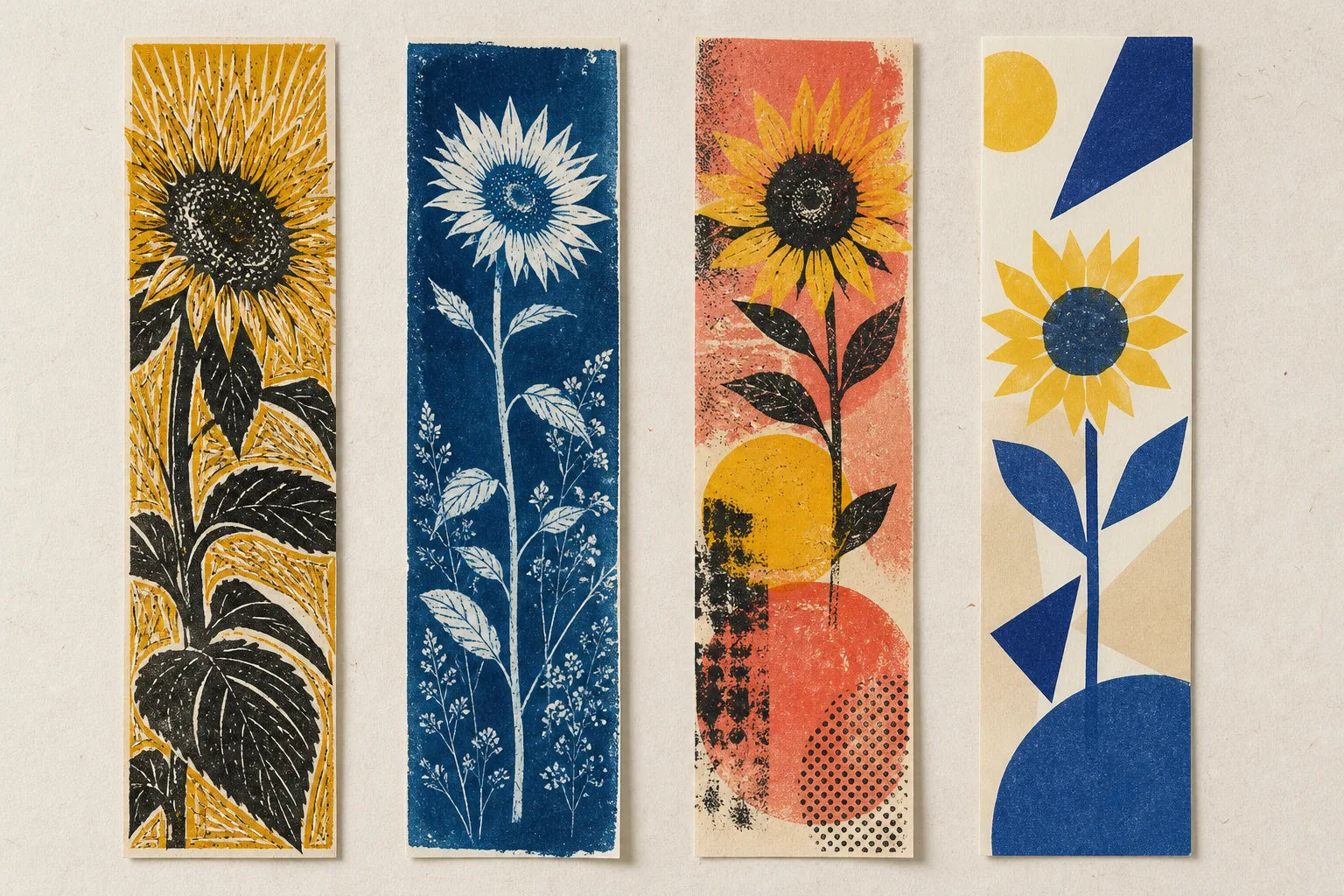
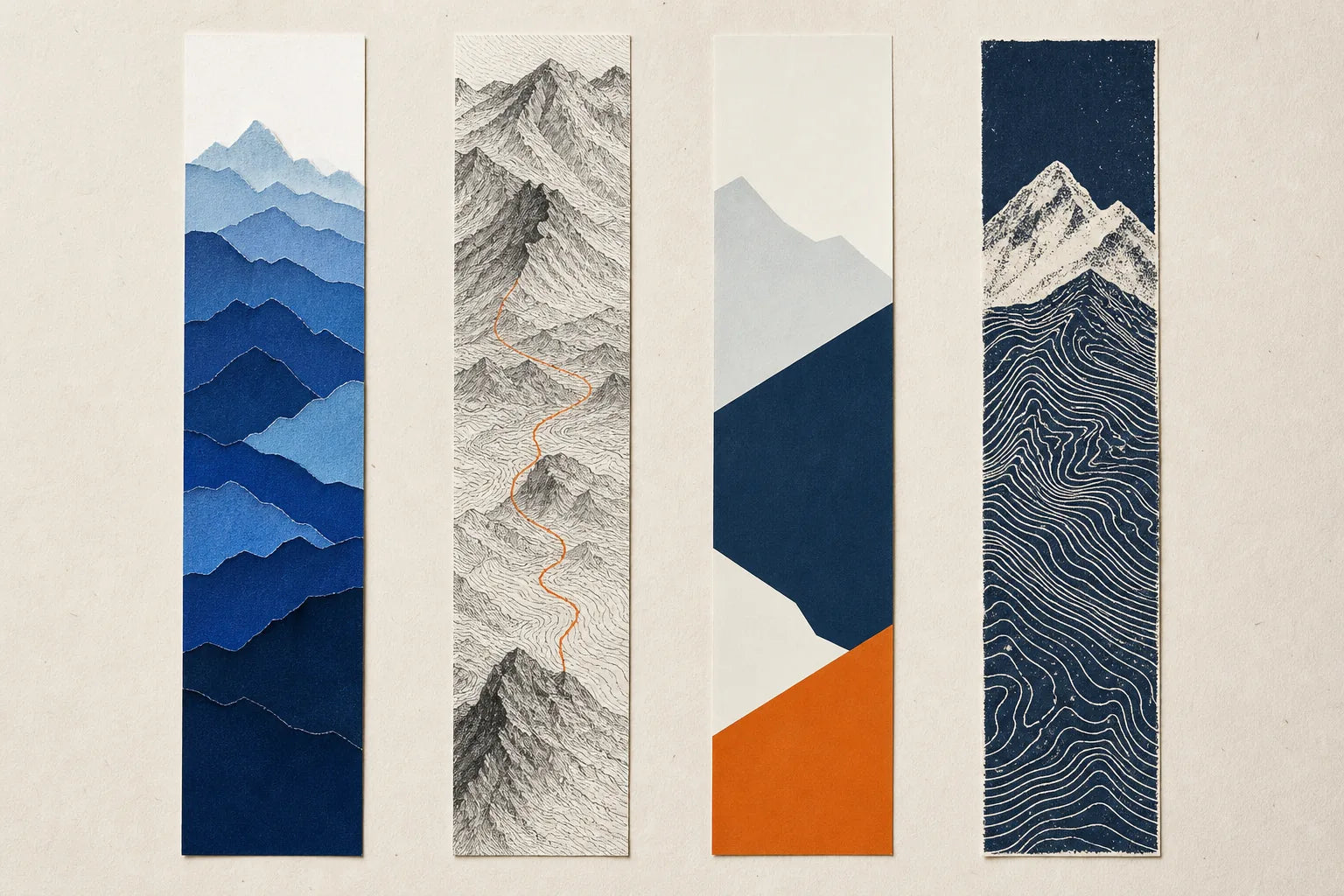
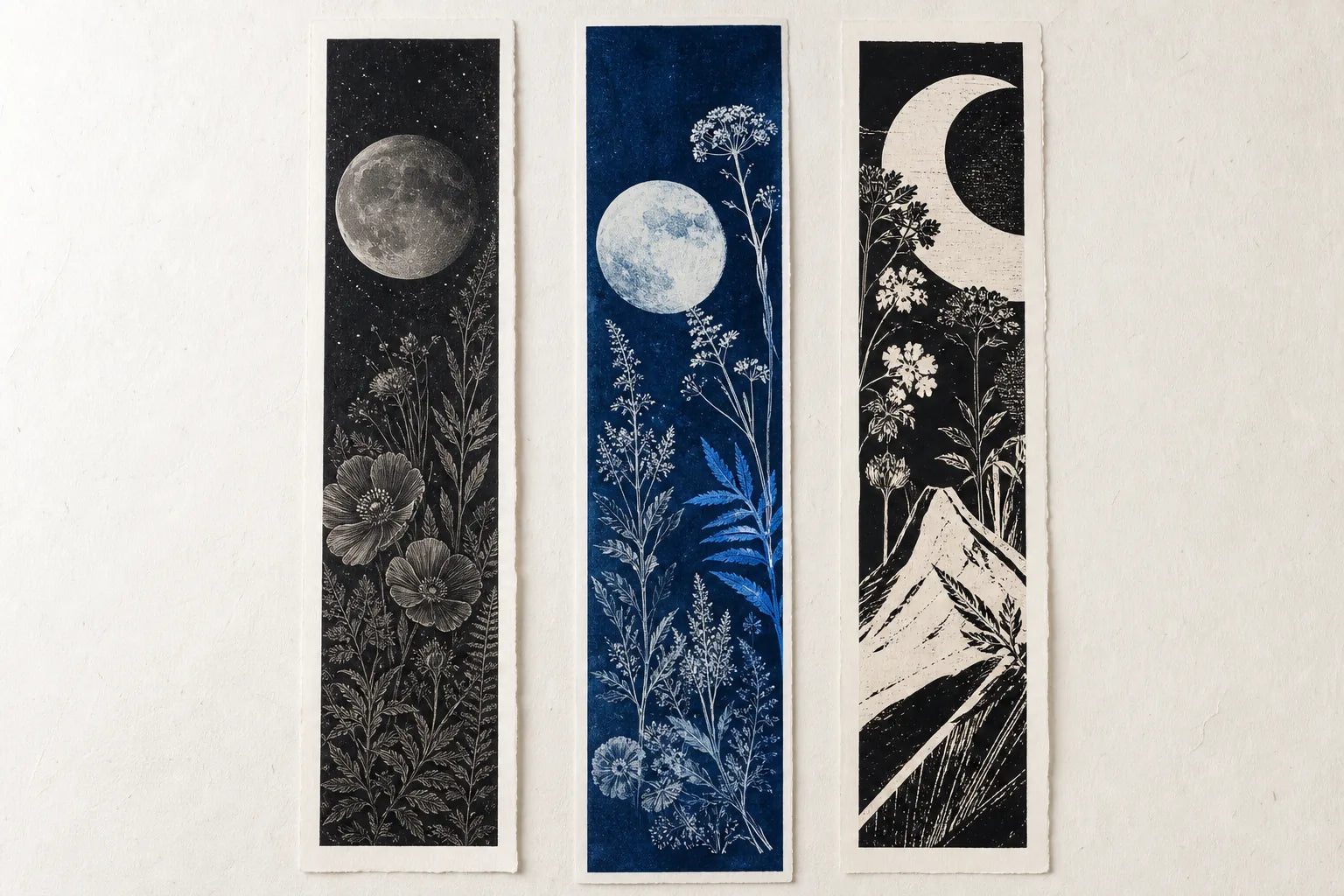
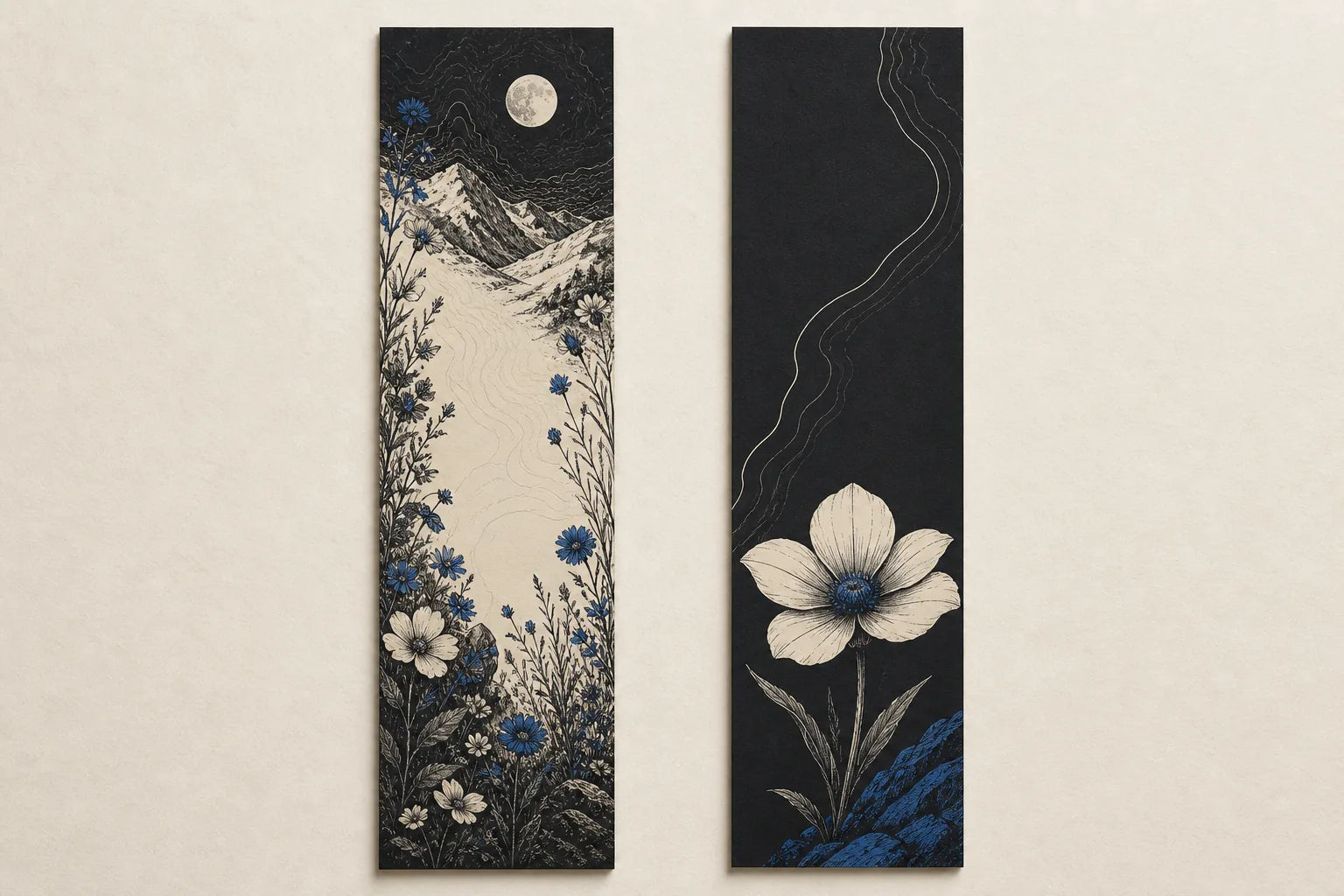
Combine subject + visual medium + palette: sunflower risograph in ochre and ink; alpine contour cut-paper in cobalt; lunar botanical engraving in black and silver.
Separate source from ingredients.
From a permitted reference, name what you actually love: the colour contrast, line density, negative space or print texture. Those ingredients are the brief; the finished artwork is not.
Let the TOP tell the story.
Use the full length for rhythm, detail and surprise. Protect the centre around the bindings, and check that the composition still reads when boots cover part of it.
Make the BASE bolder and simpler.
Carry one emblem, crop or colour field into a high-contrast running-surface composition. It should feel related to the TOP without becoming a mirrored poster.
See the choice before you make it.
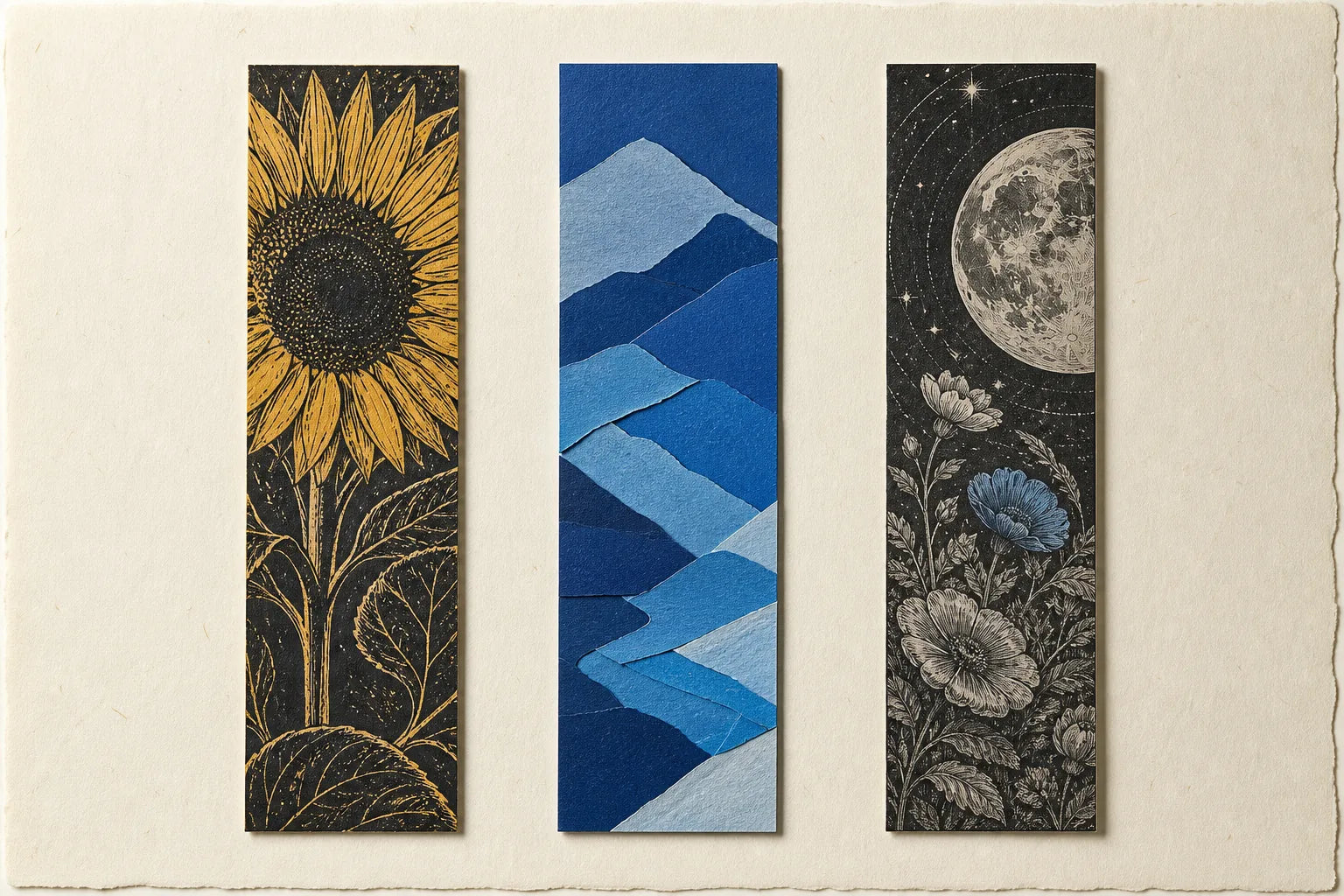
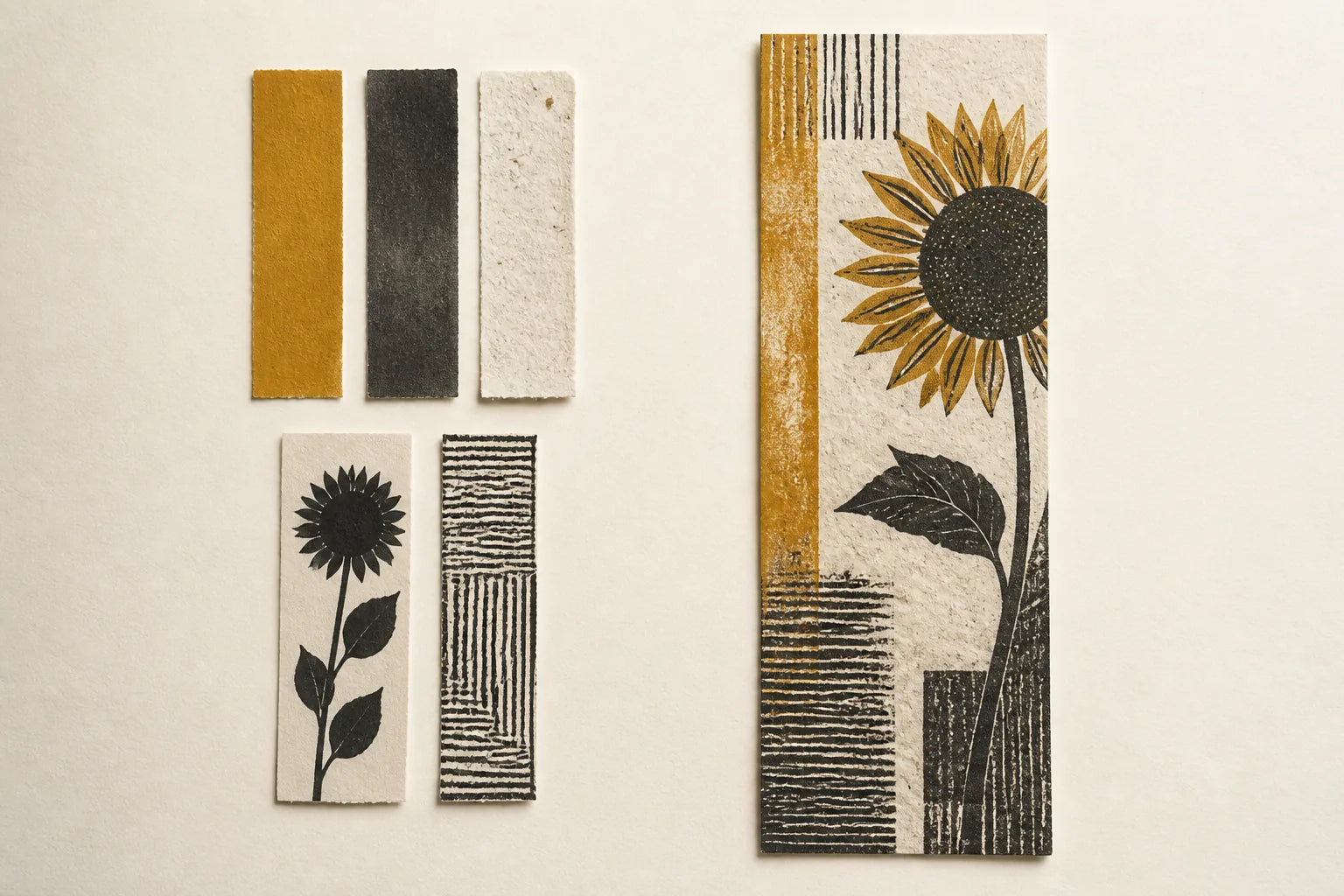
What matters before you choose.
Begin with a keyword.
A precise phrase creates a stronger brief than a vague mood. Combine subject, colour and medium: for example, dark botanical cyanotype or abstract alpine screenprint.
Design two different faces.
The TOP can carry detail and narrative. The running BASE should reuse the palette and emblem in a simpler composition that remains readable and credible in P-Tex.
Use inspiration as direction.
Upload only a reference you own or have permission to use. CarveDifferent AI should create a new interpretation, not reproduce another artist's finished snowboard.
From sunflower pin to a board that is yours.
You save a sunflower image for its warm yellow, oversized crop and handmade ink texture. Instead of asking the AI to copy it, you brief “giant sunflower linocut, ochre and charcoal, asymmetrical negative space”. The TOP becomes an immersive field of petals and carved marks; the BASE keeps one oversized seed-head symbol and the same two colours. The source supplied a direction. The final pair has its own composition.
Questions riders ask before they commit.
Can I use a design I saved on Pinterest?
Use Pinterest to collect directions, palettes and subjects. Upload an image only when you own it or have permission to use it, and ask for a new original interpretation rather than a copy of the source artwork.
Do I need to know graphic design?
No. Start from a permitted visual reference and a short direction, then refine the generated TOP and BASE in the live editor. You can still move, scale, recolour and add your own elements before approval.
Save the vibe. Make it yours.
Bring a permitted reference and a clear direction. Build an original snowboard without starting from an empty design file.
Create my snowboard design