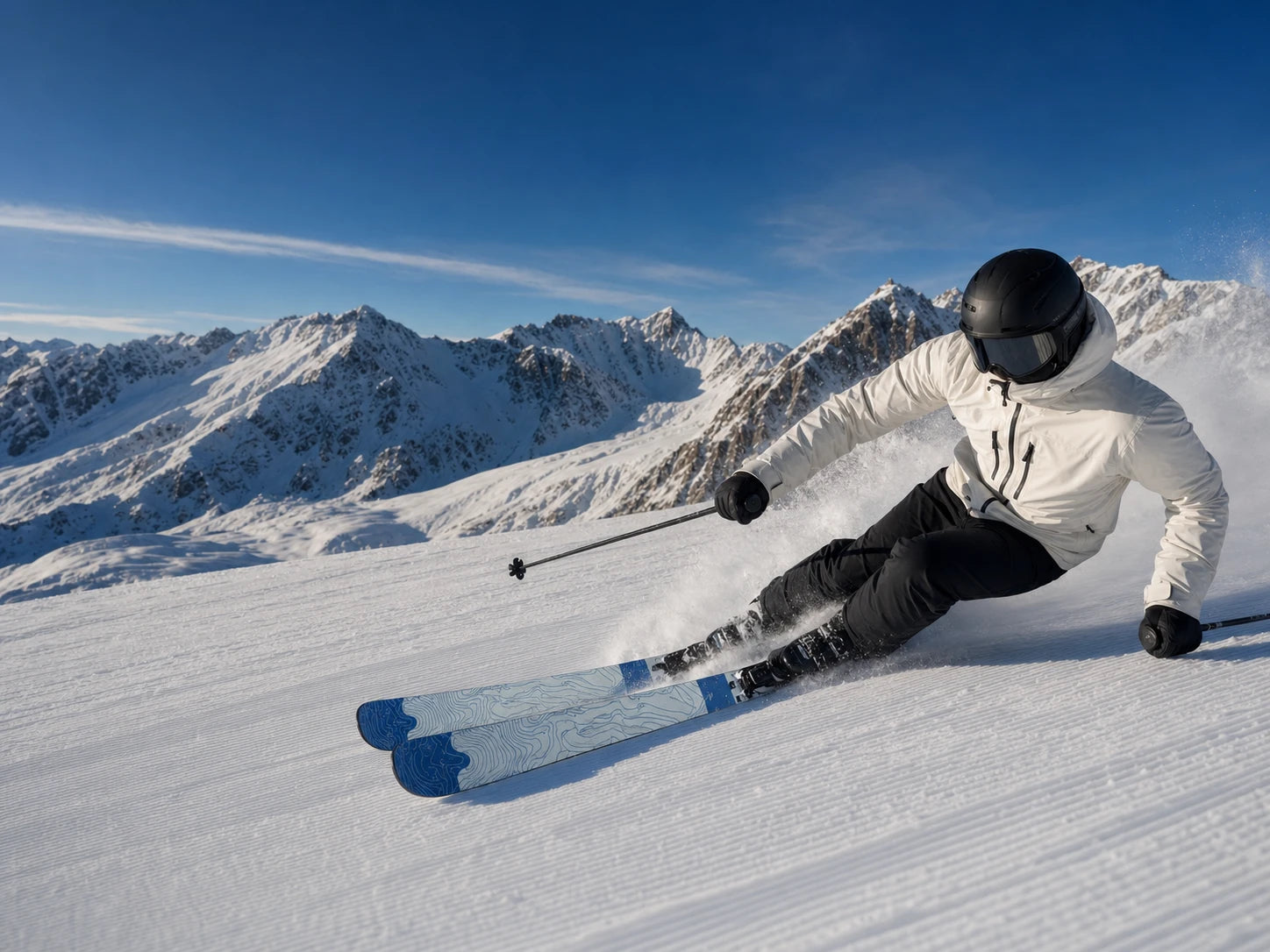
Shape changes the line. Camber changes the feel.
The outline decides direction, surface area and stance. The side profile decides where the board loads, releases and meets the snow.
Short answer. Choose shape for the terrain and direction you ride, then choose camber or rocker for the grip, forgiveness, pop and float you want beneath that outline.
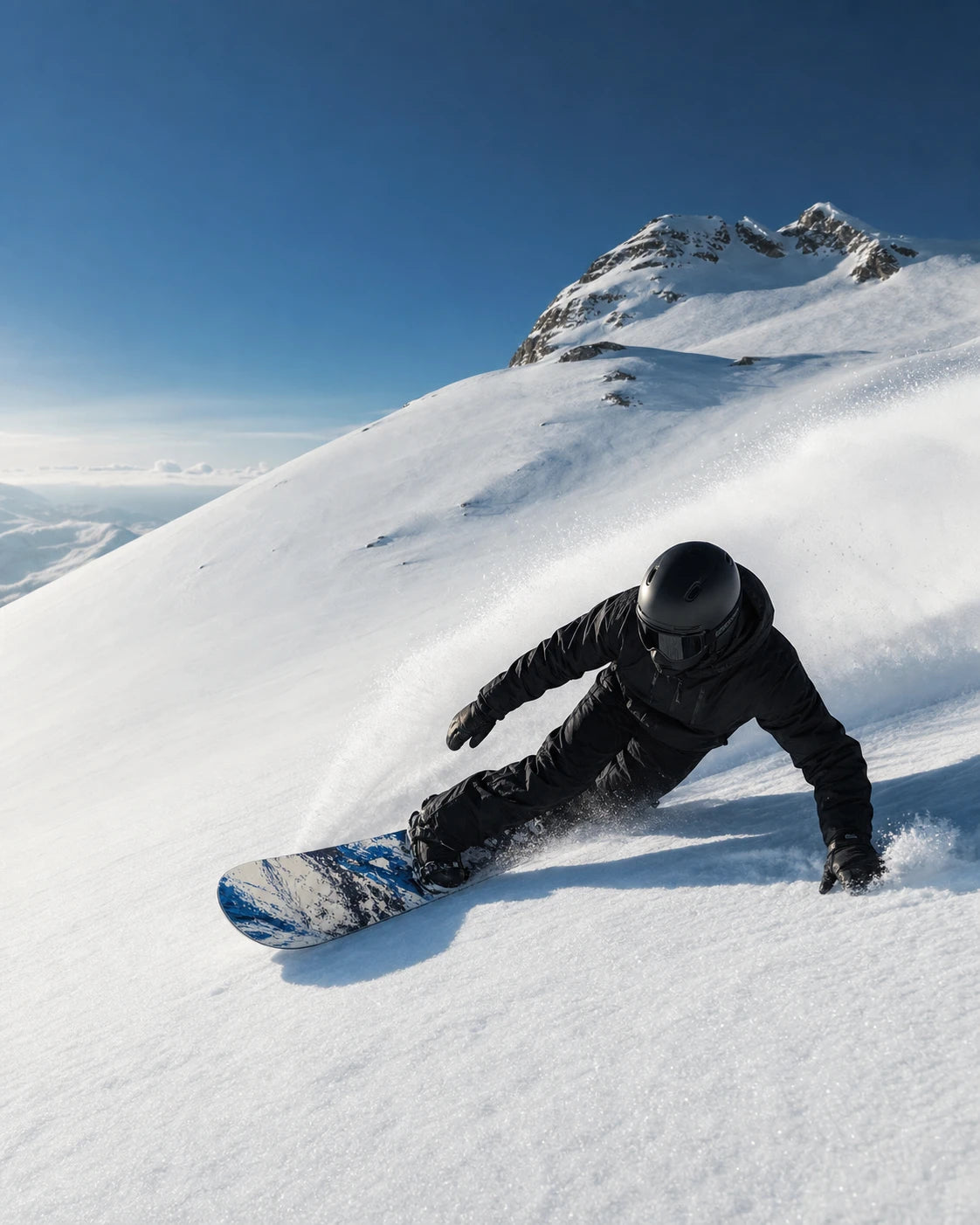
Choose the ride, then the technology.
Do not shop a camber word in isolation. Start with the line you want to draw, then combine outline and profile to create that behaviour.
Freestyle and switch: centre the ride.
A true twin keeps nose, tail and stance balanced. Add a forgiving hybrid profile for easier release, or more camber when pop and edge response matter most.
All-mountain: protect versatility.
A directional twin adds a preferred forward direction without abandoning switch riding. Hybrid camber is a useful middle ground for grip, release and varied snow.
Carving: build pressure and support.
A directional outline, effective edge and supportive camber help the board load predictably through the turn. Flex, length and width still decide how usable that grip feels.
Powder: move lift toward the nose.
Look for nose rise, taper, setback or volume where it creates float. Rocker can help release the front, but surface area and the complete directional shape do the real work.
See the choice before you make it.
What matters before you choose.
Shape controls direction.
True twins centre the ride for switch and freestyle. Directional shapes bias the board toward forward riding. Volume shapes move surface area into a shorter, wider outline.
Profile controls contact.
Traditional camber loads the edge and stores energy. Rocker lifts contact zones for easier release and float. Hybrid profiles place those behaviours in different parts of the board.
The combination is the product.
A profile cannot be judged without its shape, flex and length. Compare the complete factory option instead of choosing one technical label in isolation.
Why two camber boards can feel unrelated.
Put traditional camber under a centred true twin and it can feel energetic, precise and freestyle-ready. Put a related profile under a longer directional shape with taper and setback and the result can feel calm, powerful and built for forward lines. The label is similar; the outline, contact length, flex and stance change the entire experience.
Questions riders ask before they commit.
Is rocker always easier for beginners?
Rocker can reduce edge-catching and make pivoting easier, but stability and edge hold also depend on flex, length and the rocker placement. A forgiving hybrid profile may offer a better balance for many riders.
Which snowboard profile is best for powder?
Look for useful nose rise, surface area and a shape that supports forward float. Directional rocker or hybrid camber can help, but the complete shape and rider setup matter more than one label.
Choose how it rides before you choose how it looks.
Compare the available factory shapes and profiles, then build an original TOP and BASE around the setup you trust.
Compare snowboard shapes